Alfred Ganz-Wolff was the uncle of Josef Ganz, the Jewish engineer and automotive pioneer. His brother Hugo Ganz was a renowned journalist and author. As director of Julius Sichel & Cie in Mainz and a humanist patron of the arts, Alfred offered protection and refuge to Jewish family members in dark times at his Villa Solina in Lucerne, Switzerland.
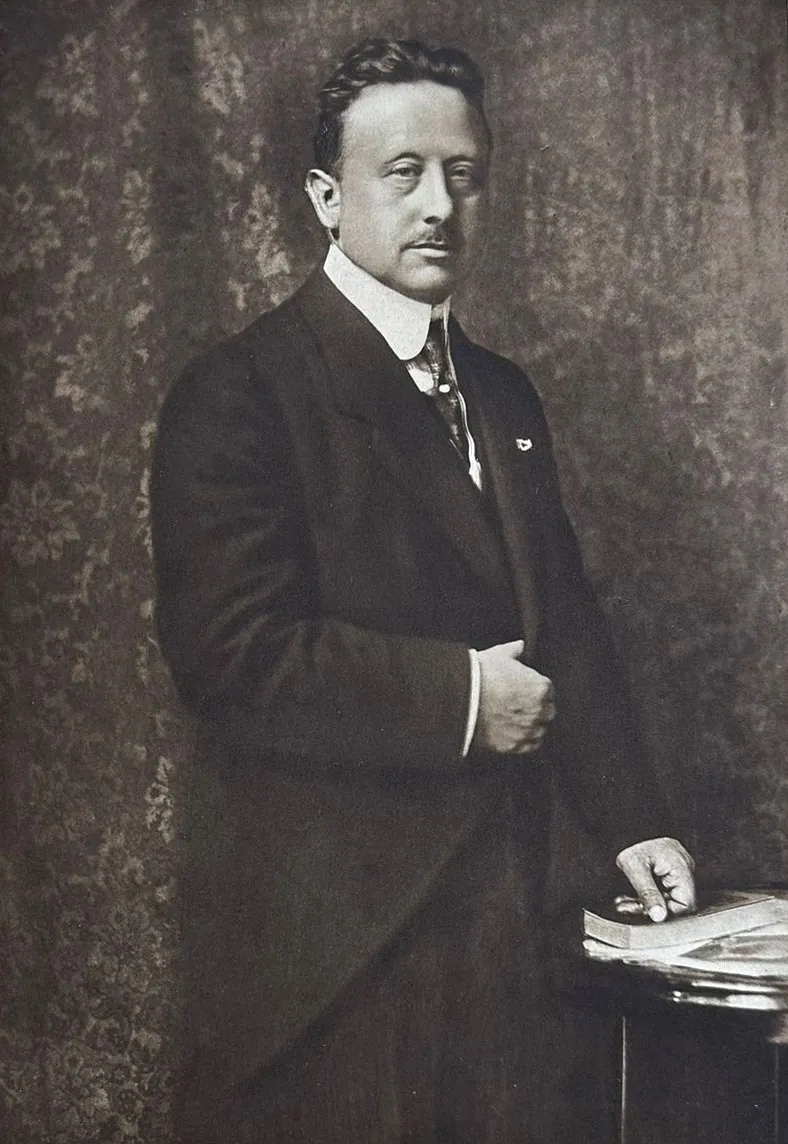
Alfred Ganz-WolffPortrait to follow
Scroll to explore
A personal dedication
As a relative of Josef Ganz and the great-grandson of Alfred Ganz, I dedicate this page to the memory of a man who not only achieved business success but used his position and means to preserve humanity in times of greatest need. After years of work with the Dutch Ganz biographer Paul Schilperoord on the life of Josef Ganz, I now wish to preserve the story of his uncle Alfred as well — a man whose humanist values and deeds should never be forgotten.
— Lorenz Schmid
The connection
Alfred Ganz-Wolff was the uncle of Josef Ganz, the Jewish engineer and automotive pioneer. His brother Hugo Ganz was a renowned journalist and author. As director of Julius Sichel & Cie in Mainz and a humanist patron of the arts, Alfred offered protection and refuge to Jewish family members in dark times at his Villa Solina in Lucerne, Switzerland.
Life & work
Alfred Ganz was born on 8 November 1874 on the Rosengasse in Mainz. His parents were Moritz and Karoline Ganz, who ran a kosher butcher's shop. Alfred had nine siblings, two of whom died in early childhood. He attended primary and secondary school in Mainz, completing his Mittlere Reife. On 15 April 1890 he began an apprenticeship as a merchant in the iron trade at Julius Sichel in Mainz, where he subsequently went to work.
On 5 February 1904 he married Valerie Wolff, an acquaintance of his sister Ida. Together they had four children: Ernst (1904), Felix (1906), Madelaine (1908) and Elisabeth (1911). All the children were born in Luxembourg, where Alfred — who had become a partner in the firm of Sichel in 1903 — saw good prospects for developing the company. Luxembourg lay at the heart of European steel production, alongside the Ruhr region, Lorraine and Belgium. In 1912 Alfred took over management of the two important Sichel branches in Luxembourg City and Esch-sur-Alzette. When the other partner, Ferdinand Sichel, lost his eighteen-year-old son, he withdrew from the management of the firm, and Alfred took over the majority of the company.
Alfred was a far-sighted, energetic entrepreneur. He recognised the importance of both calcium carbide and soldering tin as commodities of the future, and so the firm of Sichel evolved from a trading house into a manufacturer. Through his great drive, it grew into a substantial enterprise headquartered in Luxembourg, with subsidiaries in Germany, France and Belgium.
In Thonon on Lake Geneva, Sichel acquired a power station in order to build a calcium carbide factory. It went into operation in 1914. When the manager of this factory died suddenly, Alfred was forced to move with his family to Thonon. When the First World War broke out, the family had to leave Thonon in haste and moved to Wiesbaden, where Alfred's parents lived.
Alfred was conscripted into the military. Thanks to his command of French, he was assigned to the railway surveillance service. His good connections secured him a posting on the line Saarbrücken – Thionville – Luxembourg, which also allowed him to attend to his private affairs. After his calcium carbide production was confiscated by the French, he found new sources in Switzerland at the carbide works of Mr Frey Fürst on the Bürgenstock.
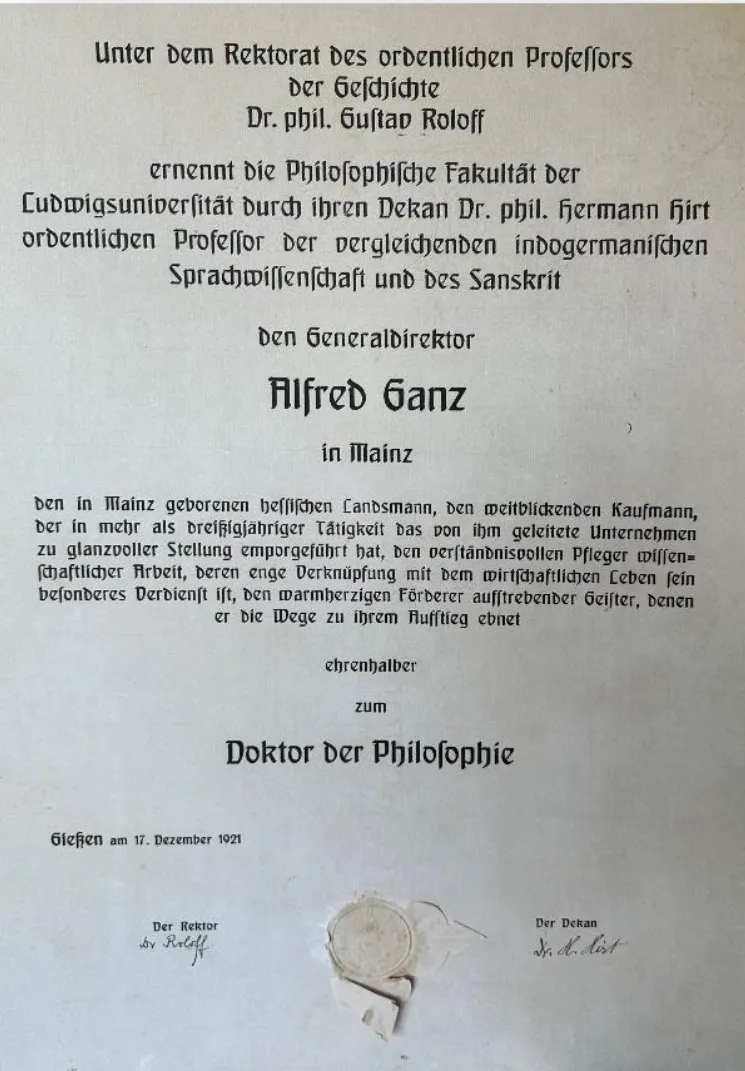
These contacts led him to settle in St. Niklausen near Lucerne. On 1 May 1918 the entire family moved into the Villa Solina. From there he ran the constantly growing Sichel group. On 17 December 1921 the Faculty of Philosophy of the Ludwig University of Giessen awarded him an honorary doctorate. The certificate honoured him as a "far-sighted merchant who in more than thirty years has led the firm under his direction to a position of brilliance", as a "discerning patron of scholarly work" and as a "warm-hearted supporter of aspiring minds, for whom he has paved the way upwards". In the 1920s he acquired an anthracite coal mine in Grône in the Valais and in 1923, together with the Bank La Roche, founded Blockmetall in Buchs near Zurich, a producer of soldering tin.
In the recession of 1929 and then chiefly through the rise of the National Socialists, the German companies were seized and the firms in Luxembourg and France placed under sequestration. The family survived the Second World War in St. Niklausen. The coal mine became a great stroke of luck, as coal grew scarce in Switzerland.
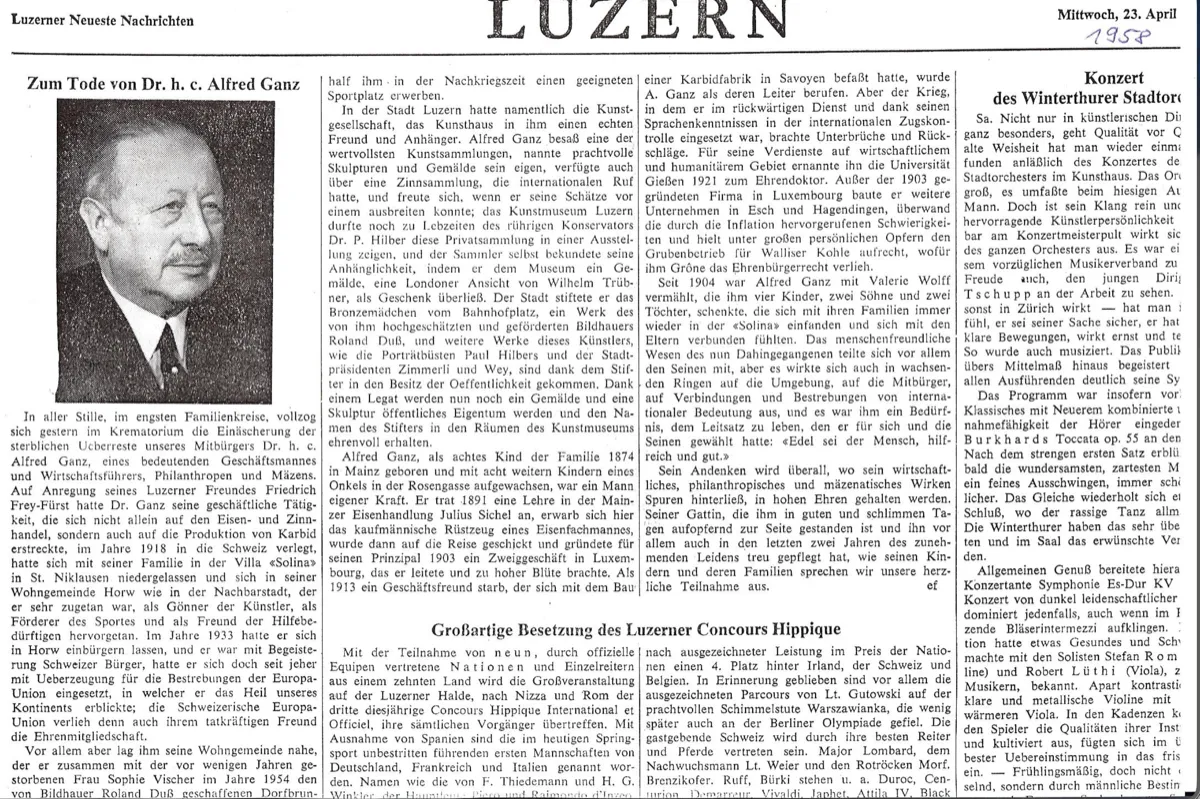
Alfred Ganz was a generous and open-hearted man. His cheerful nature won him many friendships, including in the world of business. In his life he helped countless people; his close and extended family in particular owed him much. Thus he sheltered his brother Cäsar and his wife Emilie, the parents-in-law of his youngest daughter and, at times, his son Felix and family throughout the war years. Not all his siblings could be saved: his sister Regina Ida Marx (née Ganz) was murdered in 1943 at the Theresienstadt concentration camp. He died at the age of 84 after a brief illness.
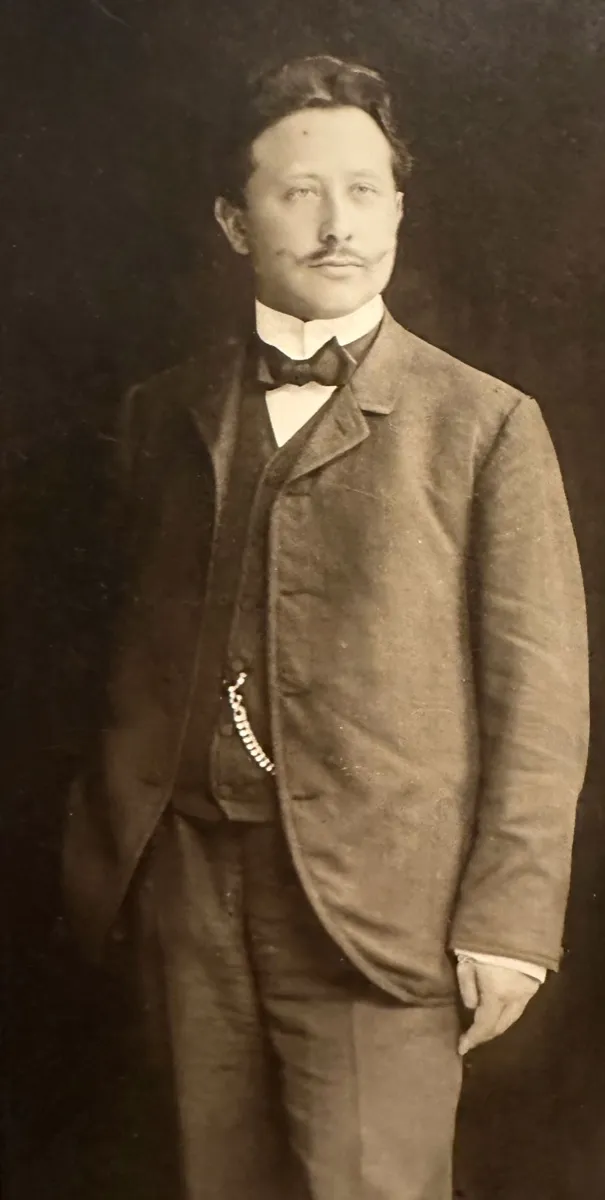
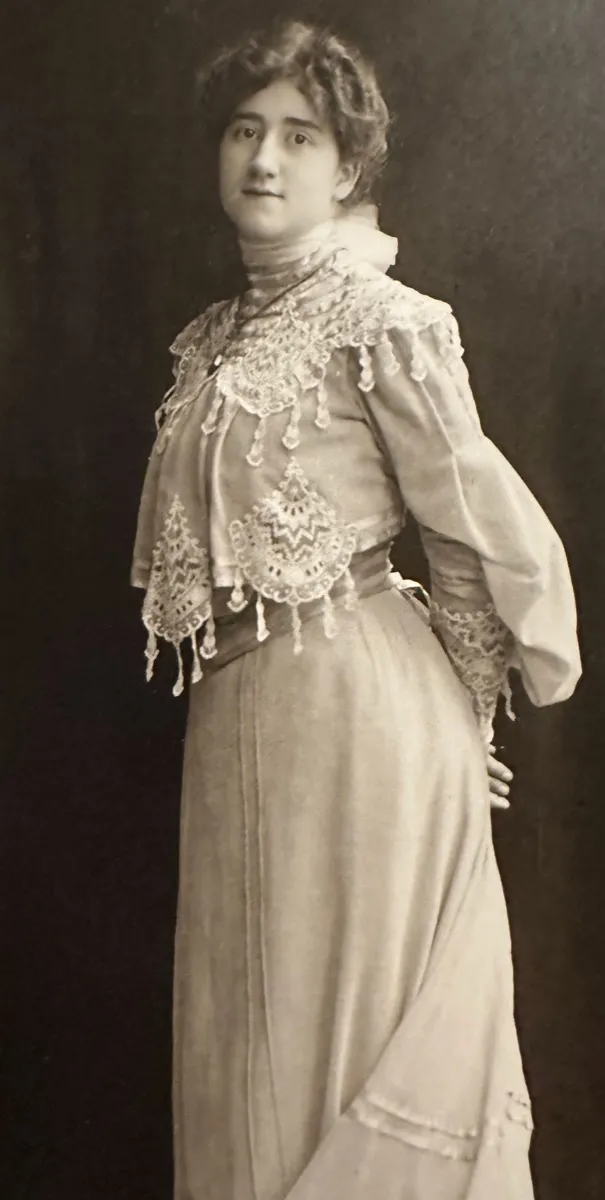
Alfred Ganz and Valerie Wolff, 1903
Profile
Born
8 November 1874 in Mainz
Died
19 April 1958 in Lucerne
Title
Director General, Dr. phil. h.c.
Company
Julius Sichel & Co. (Sichel group)
Honorary doctorate
17 December 1921, Faculty of Philosophy, Ludwig University of Giessen
Wife
Valerie Wolff (1881–1967)
Children
Ernst, Felix, Madelaine, Elisabeth
Villa Solina
St. Niklausen near Lucerne
Honorary doctorate certificate (Dr. phil. h.c.), University of Giessen, 1921
"
Edel sei der Mensch,
Hülfreich und gut!
A humanist legacy
Alfred Ganz lived by these humanist principles. On the occasion of his 30th business anniversary in 1921, in view of the "hardship of the times", he forewent any festive celebration and instead donated generously to the poor of the city of Mainz, to his Mainz gymnastics club and to a welfare foundation of the Sichel group.
Later, in his home community of Horw in Switzerland, he was known as a patron of artists, a supporter of sport and a friend of those in need. He worked with conviction for the cause of the Europa-Union, in which he, like many others, saw the greatest chance to prevent future wars in Europe, and was made an honorary member of the Swiss Europa-Union in recognition.
Notable relatives
Wife
Valerie Ganz-Wolff
1881–1967
The daughter of Ferdinand and Mathilde Wolff, Valerie was born in Bad Kreuznach. Her father ran a piano shop and a violin-making firm together with his brothers Heinrich and Leopold; Ferdinand was credited with inventing the "silent violin", a practice instrument for violinists. Valerie completed her examinations in violin and piano at the Kreuznach Conservatory. At the age of 24 she met Alfred through his sister Ida. At the Villa Solina she was an outstanding hostess to guests from all over Europe and ran the large household with foresight and discipline. During the Second World War, Alfred's brother Cäsar and his wife Emilie, the parents-in-law of their daughter Elisabeth, and at times their son Felix and his family, all lived under her roof. After her husband's death in 1958, she lived at the Solina until her own death in 1967.
Brother
Hugo Ganz
1862–1922
As a young grammar-school teacher in Giessen, Hugo published his 1888 reform pamphlet "Turnsaal und Exercierplatz" against military drill in physical education. From the educator emerged a journalist and writer of high standing in his time, an intimate observer of Eastern Europe in particular. He wrote for the Frankfurter Zeitung and the Neue Zürcher Zeitung. In 1904, together with his wife, he travelled through the Russian Tsarist empire and called it "a country with thirty million prisoners and one million jailers."
Jewish engineer and automotive pioneer who, as technical adviser and editor of the magazine "Motor-Kritik", profoundly influenced the development of the automobile. He designed the Standard Superior (1933) and is credited as the inventor of the essential parts of the Volkswagen. Alfred's brother Hugo Ganz was Josef's father.
Alfred was a passionate collector of paintings. Georg Biermann, a respected connoisseur of the art scene, brought him only the finest painters of his day. Vlaminck and Derain were also represented in his collection. To the city of Lucerne he donated, among other things, the "Bronzemädchen" (bronze girl) at the railway station square. He left the Kunstmuseum Luzern a painting by Wilhelm Trübner. His large pewter collection of international renown grew out of his purchases of scrap pewter for his soldering-tin production.
Lovis Corinth
1858–1925
Lovis Corinth ranks among the most important German painters at the turn of the 19th to the 20th century. As one of the leading representatives of German Impressionism and a forerunner of Expressionism, he produced an extensive body of portraits, landscapes, still lifes and mythological scenes. Corinth was a professor at the Berlin Academy and president of the Berlin Secession. His works hang today in the world's greatest museums.
Connection to Alfred Ganz
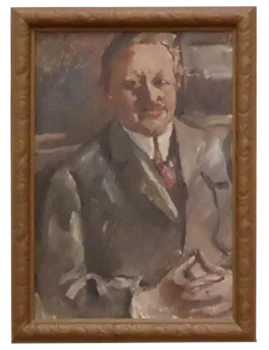
The eminent painter Lovis Corinth and his wife Charlotte Berend-Corinth, herself a well-known painter, were guests at the Villa Solina on several occasions, including in the autumn of 1921. Alfred and his wife welcomed the artists with great hospitality. During their stay Corinth painted Alfred Ganz — a work completed after only three sittings and considered exceptionally successful by all involved. As thanks for the hospitality they had enjoyed, the Corinths gave the painting "Das kleine Paradies" ("The Little Paradise", 1921). The portrait of Alfred Ganz is today held in the depot of the Kunsthaus Luzern.
Lovis CorinthImage to follow
Corinth in 1887 (source: Wikipedia ) Lovis Corinth: Portrait of Dr. Alfred Ganz, 1921 (Kunsthaus Luzern)
Roland Duss
1901–1977
Roland Duss was a major Swiss sculptor whose works still shape the public spaces of Lucerne and Central Switzerland today. His expressive bronze sculptures, reliefs and portrait busts combine a classical formal language with modern expressive force. Duss was a master of figurative sculpture, valued for his lifelike, powerful renderings.
Connection to Alfred Ganz
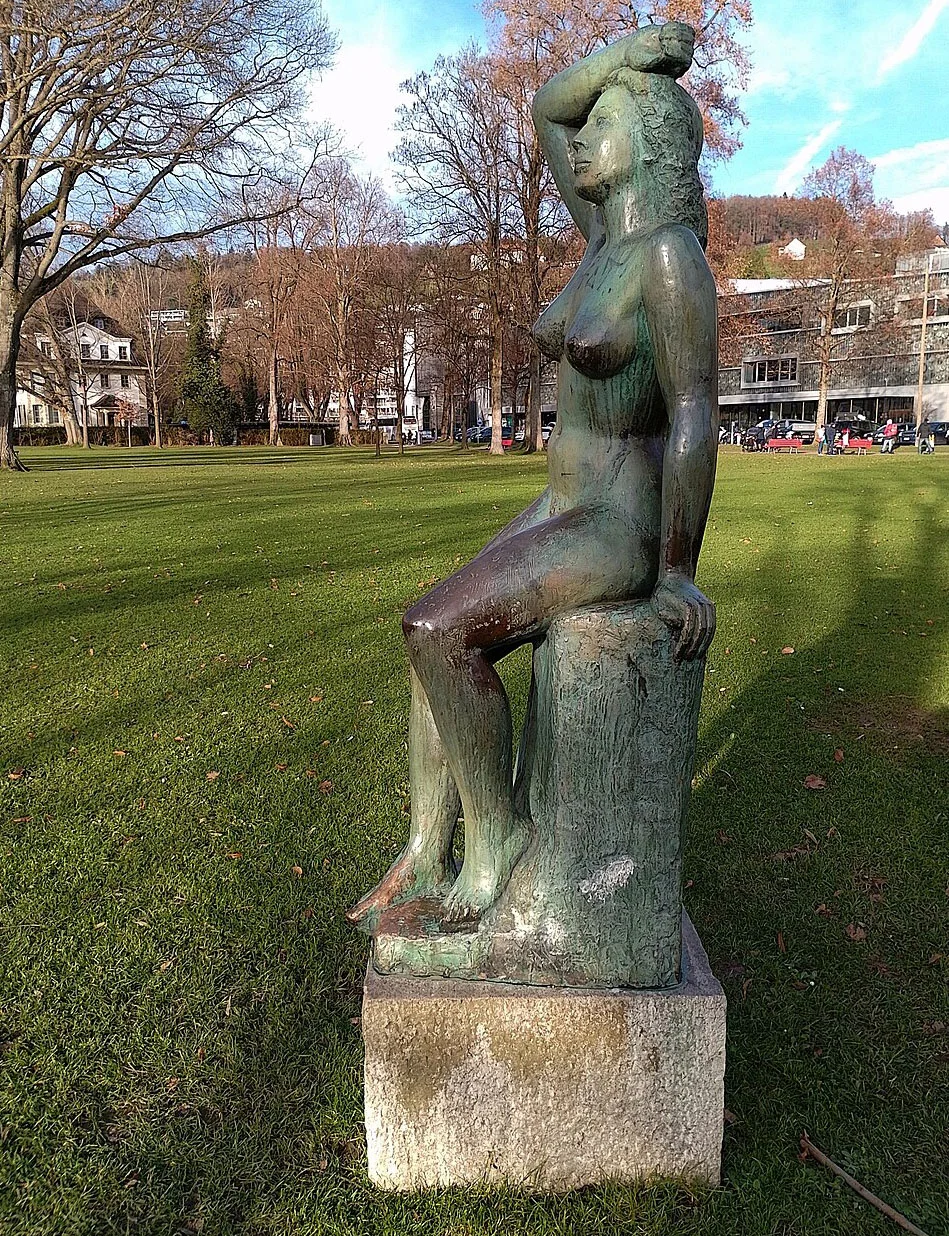
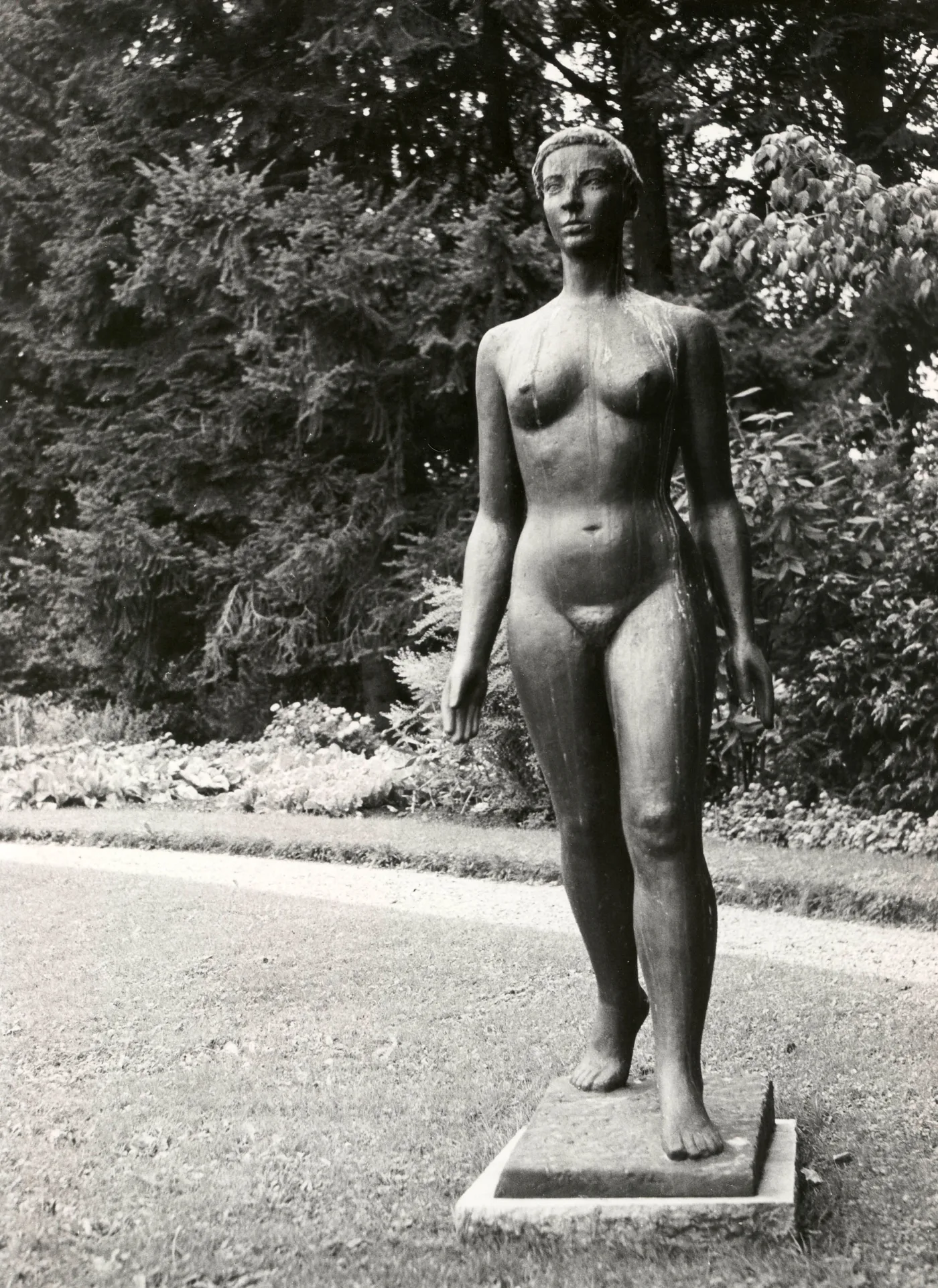
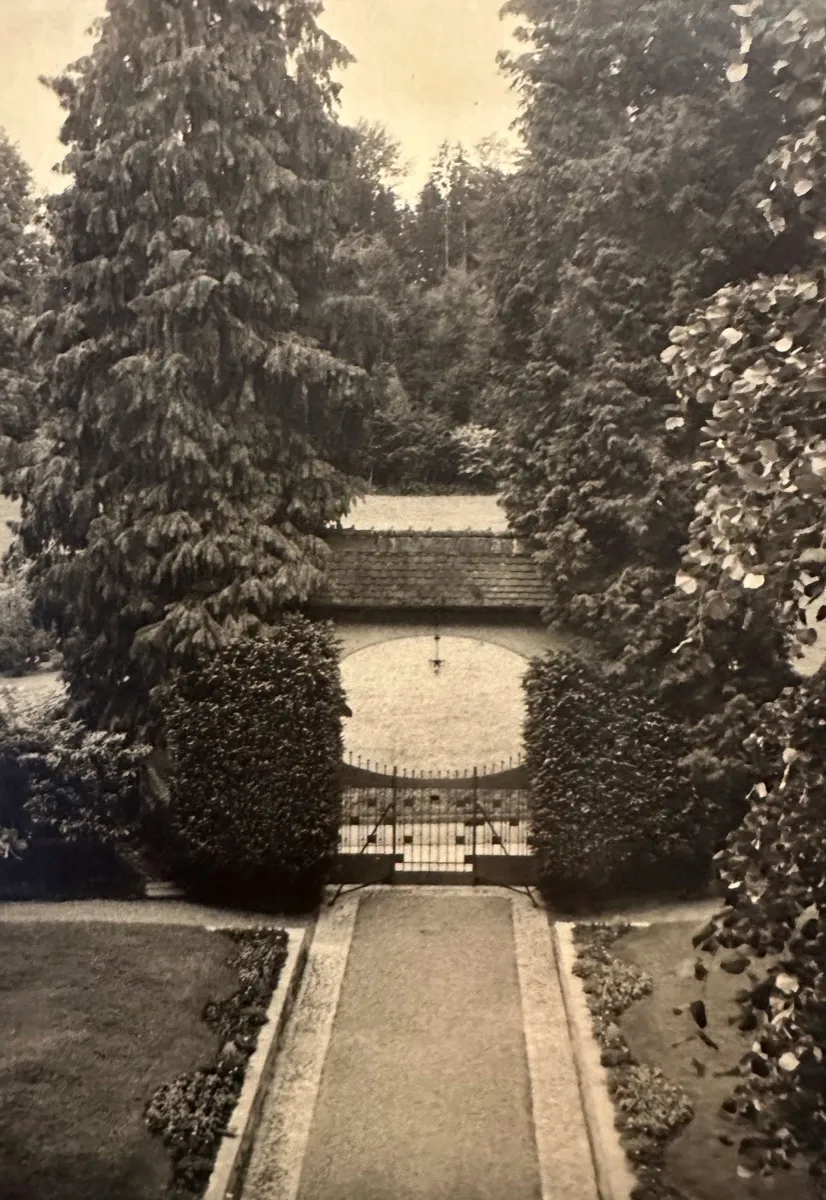
Alfred Ganz was an important patron and supporter of Roland Duss. Beyond the many works he bought from Duss — including bronze figures that adorned the garden of the Villa Solina — Alfred made significant contributions to works in the public realm, among them a fountain in Horw and the "Einhornbrunnen" (unicorn fountain) in Lucerne. His most notable gift to the city of Lucerne was "Die Schauende" ("The Watcher"): thanks to a donation from Alfred Ganz, the figure could be made and presented to the city, where until 1962 it stood prominently on the Bahnhofplatz. When the square was redesigned, it was moved to the General-Guisan-Quai near the Verkehrshaus, where it can still be seen today.
Roland Duss: "Die Schauende" — a gift from Alfred Ganz to the city of Lucerne, standing on the Bahnhofplatz until 1962, today at the General-Guisan-Quai (Ueli Ganz archive)
Roland Duss: "Stehende" — bronze sculpture (Ueli Ganz archive)
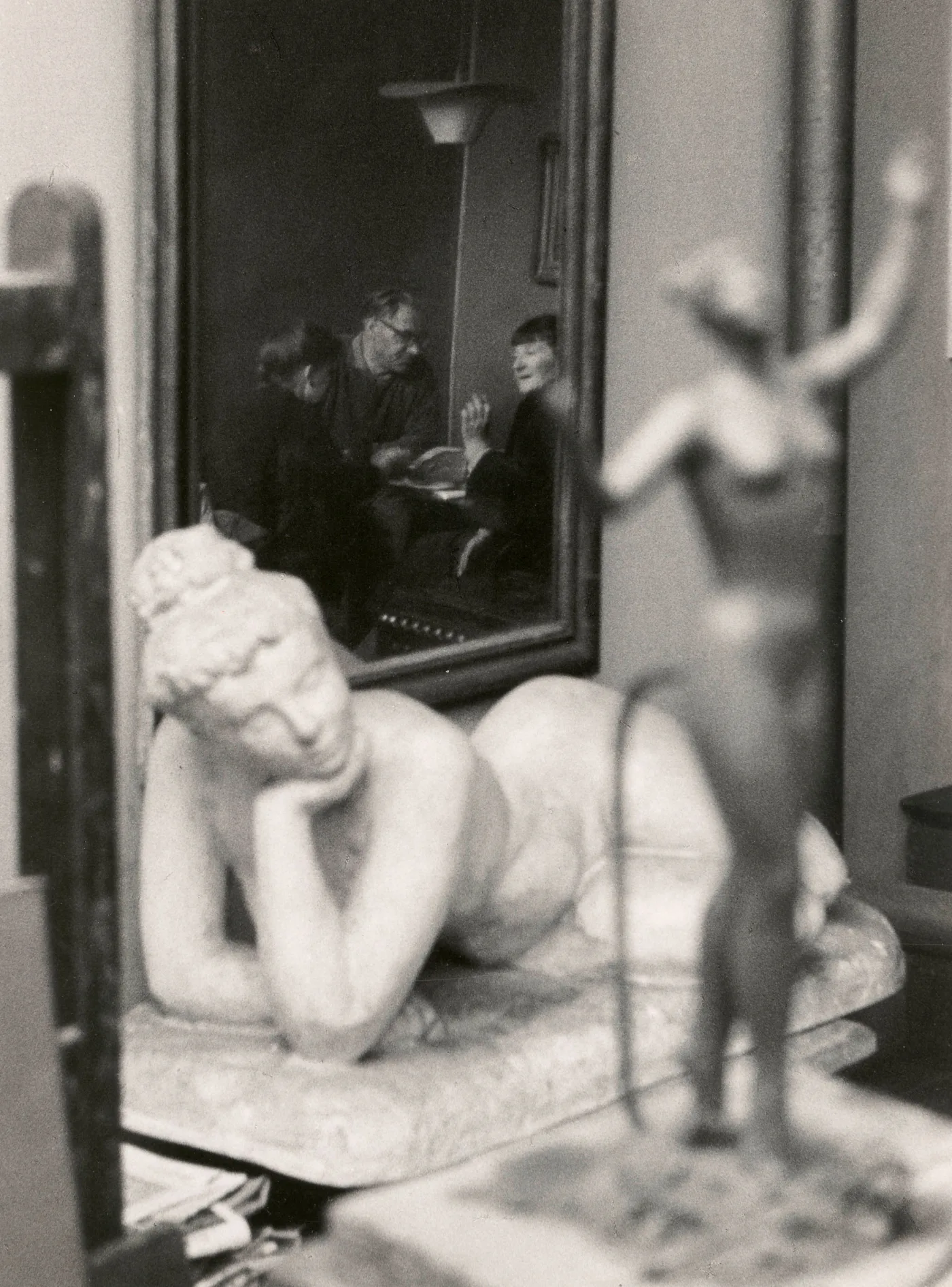
In the studio of Roland Duss (Ueli Ganz archive)
St. Niklausen near Lucerne, on Lake Lucerne
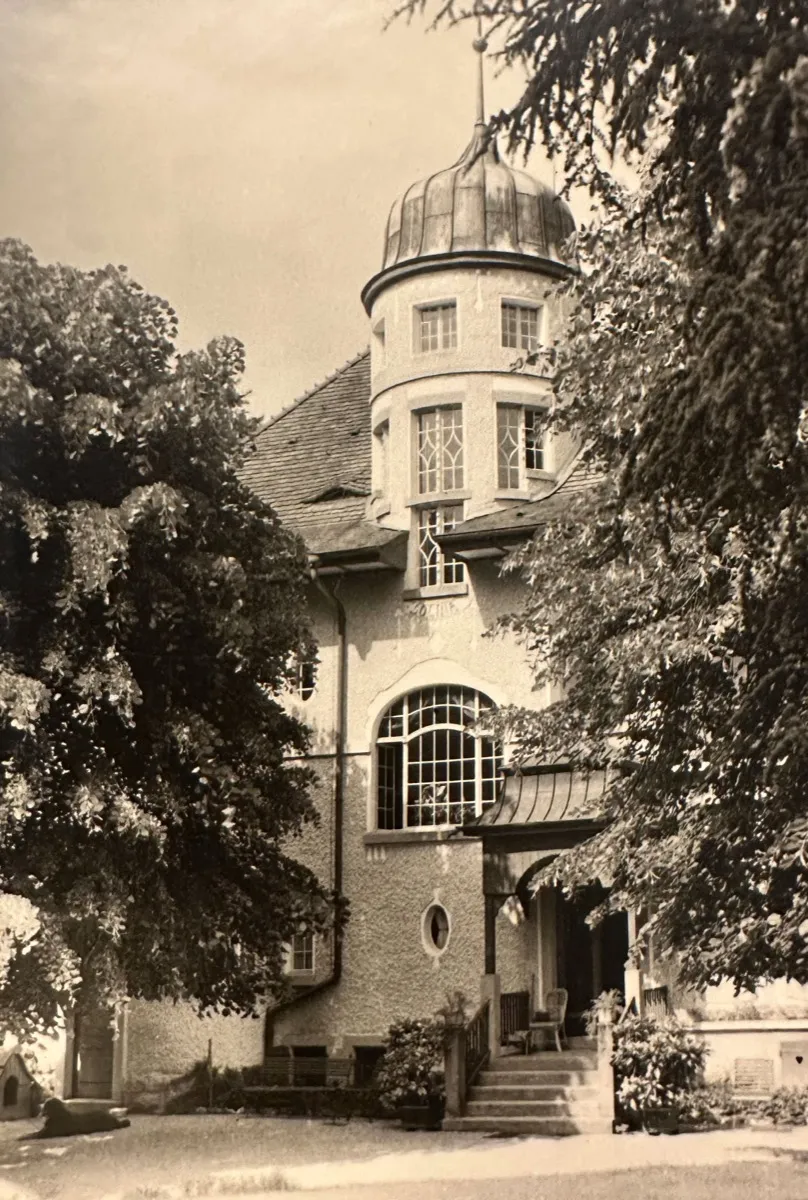
Villa Solina
A place of refuge and hospitality
On 1 May 1918 the entire family moved into the Solina. From there Alfred ran the steadily growing Sichel group. The villa became a place of hospitality and a meeting point for guests from all over Europe — for businessmen, bankers, artists, politicians and family members.
From September 1939 the Solina also became a place of rescue for threatened relatives: Alfred's brother Cäsar and his wife Emilie from Luxembourg, Otto Strauss and his wife from Nuremberg, and his son Felix and family all found refuge there. At times eight adults and two children lived under one roof. All of them were under acute threat from the Nazi regime because of their Jewish origins. Alfred's sister Regina Ida Marx (née Ganz) was less fortunate: she was murdered in 1943 at the Theresienstadt concentration camp.
In September 1946 the foundational congress of the Europa-Union was held in nearby Hertenstein on Lake Lucerne. There the Hertensteiner Programm with its twelve famous theses was adopted; on 22 September it was presented to the wider public on the Rütli meadow. The same period saw Winston Churchill's much-noted Zurich plea for a united Europe on 19 September 1946. The Hertensteiner Programm later became one of nine foundational documents of the Union of European Federalists (UEF), founded in Paris in December 1946, which sought a federal, democratic and constitutional union of the European peoples.
In the climate of this European awakening, the Villa Solina apparently saw repeated encounters with delegates and guests of the Europa-Union as well.
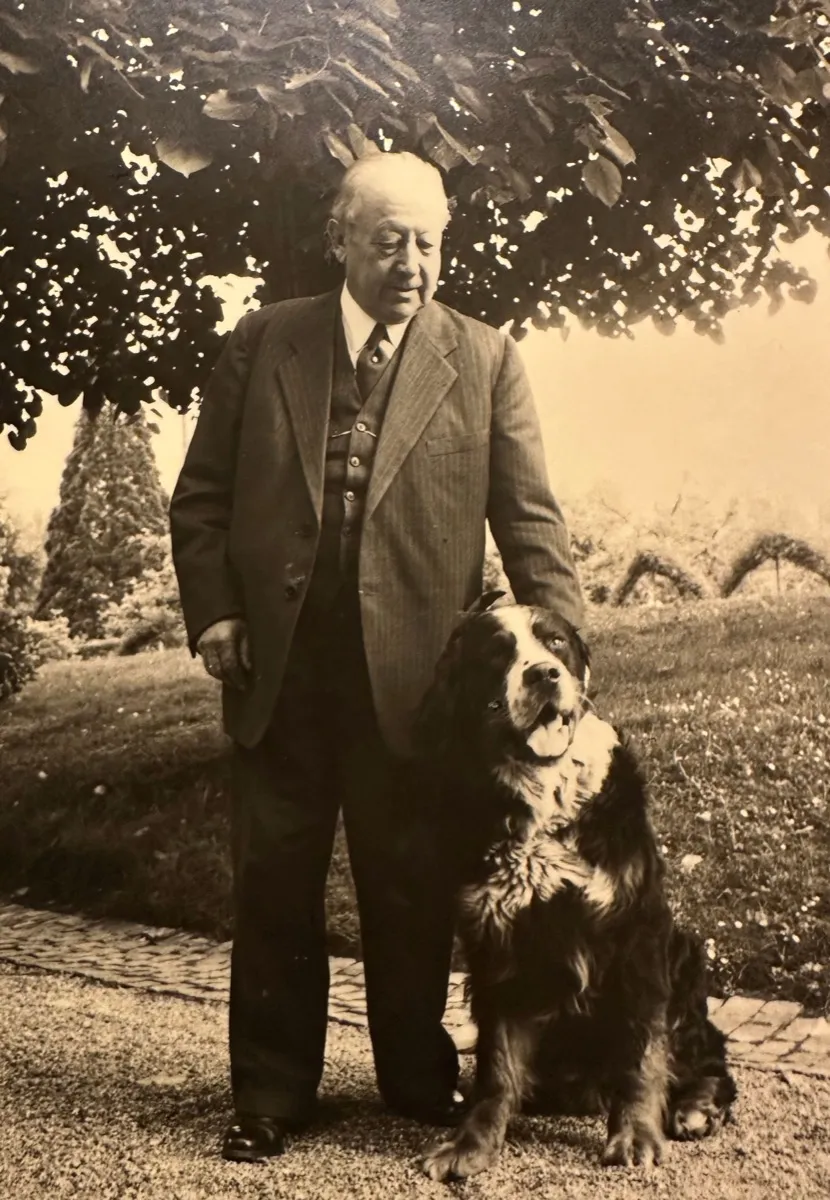
Villa Solina with its towerEntrance to the Villa SolinaAlfred Ganz in the garden
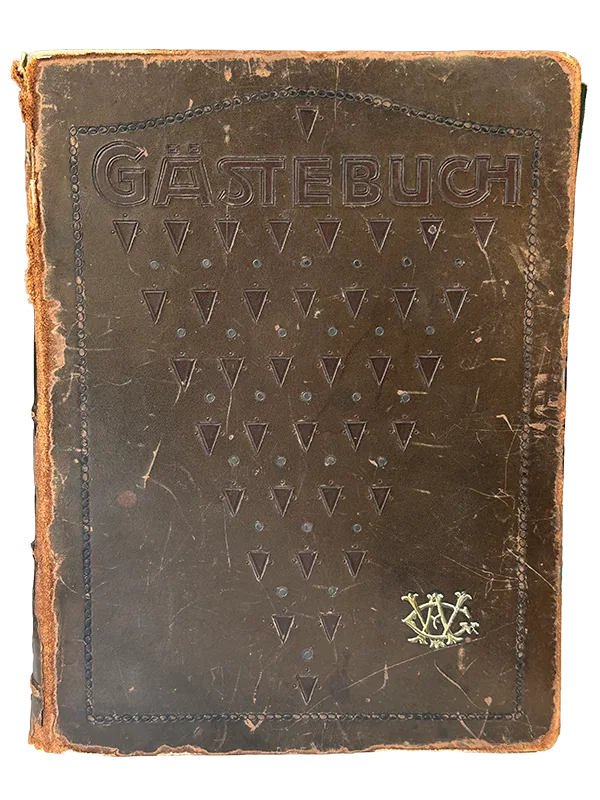
The guestbook of the Villa Solina
Introduction
The guestbook of the house "Solina", from the estate of Alfred Ganz, documents personal encounters and relationships in the family and historical context across several decades. The entries range from the years after the First World War into the post-war years and convey an immediate impression of the atmosphere of this place.
Context
The guestbook contains contributions from guests from many walks of life, including individual figures from the public life of the era. What stands out, however, are the personal entries, which reveal the house "Solina" as a place of encounter, hospitality and exchange across many decades.
Chronology
Youth & Mainz
1874 – 1890
Life
1874
Born on 8 November in Mainz, Rosengasse. Parents: Moritz and Karoline Ganz
Work
1890
Begins apprenticeship as a merchant in the iron trade at Julius Sichel in Mainz
Building the Sichel group
1903 – 1913
Life
1904
Marries Valerie Wolff on 5 February; the couple moves to Luxembourg
1904–1911
Birth of the four children in Luxembourg: Ernst, Felix, Madelaine, Elisabeth
Work
1903
Becomes partner in Julius Sichel & Co.; founds the branch in Luxembourg
1912
Takes over management of the two Sichel branches in Luxembourg and Esch-sur-Alzette
War and a fresh start
1914 – 1918
Life
1914
Family relocates to Thonon; hasty return to Wiesbaden at the outbreak of war
1918
Move into the Villa Solina in St. Niklausen near Lucerne on 1 May
Work
1914
Carbide factory in Thonon comes on stream; outbreak of the First World War
1914–1918
Military service in the railway surveillance service (Saarbrücken – Thionville – Luxembourg)
Villa Solina — flourishing and patronage
1919 – 1938
Life
1919
Visit by his brother Hugo and Marie Ganz at the Villa Solina (summer)
Work
1921
Honorary doctorate (Dr. phil. h.c.) from the Ludwig University of Giessen on 17 December
1921
Visit by Lovis Corinth and Charlotte Berend-Corinth; Corinth paints Alfred's portrait
1923
Founds Blockmetall in Buchs near Zurich together with the Bank La Roche
1920s
Acquires an anthracite coal mine in Grône in the Valais
1929
Great Depression: parts of the art collection are auctioned in Berlin
Refuge and post-war years
1939 – 1958
Life
1939
From September: gives shelter to threatened Jewish family members at the Villa Solina
1941
Naturalised as a Swiss citizen in the municipality of Horw on 13 May
1943
Alfred's sister Regina Ida Marx (née Ganz) is murdered at the Theresienstadt concentration camp
1958
Dies on 19 April in Lucerne at the age of 84
Work
1946
Founding congress of the Europa-Union in Hertenstein; the Hertensteiner Programm with 12 theses is adopted
Grave memorial
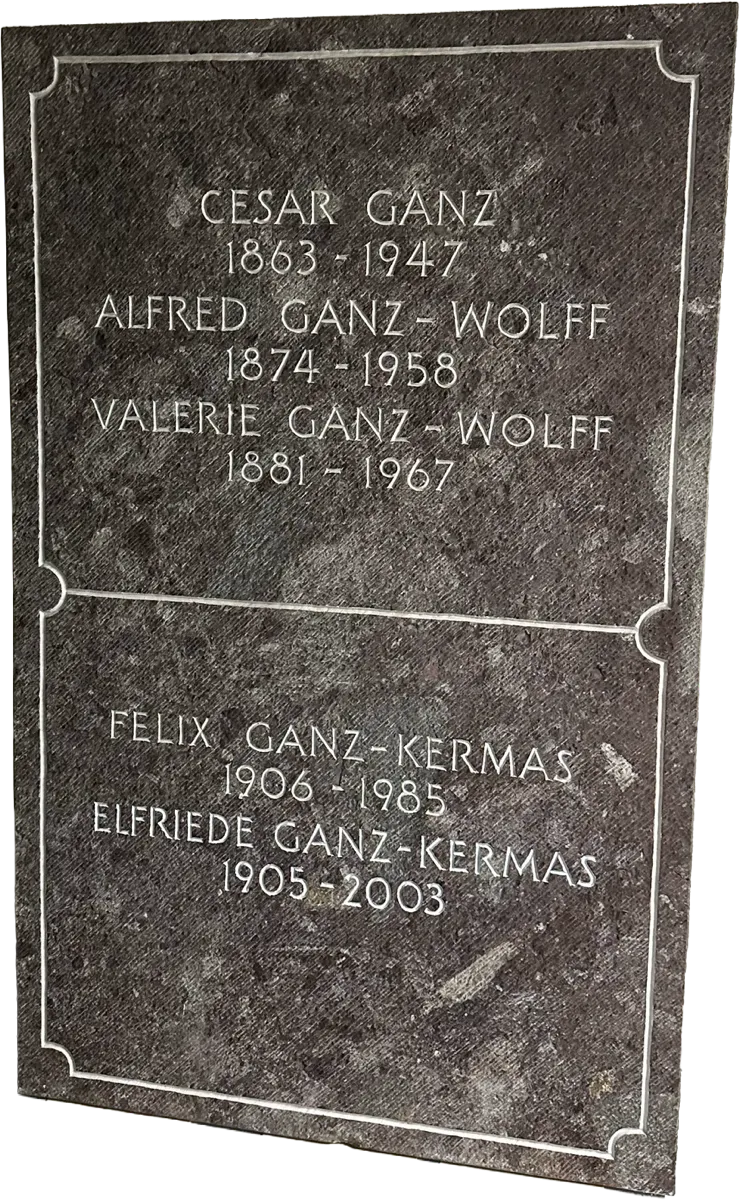
The family grave at the Friedental cemetery in Lucerne preserves the memory of three generations of the Ganz family. The simple marble plaque brings together those who lived together at the Villa Solina and shaped the story of this remarkable family. The marble plaque is today held by Lorenz Schmid — alongside the Josef Ganz Standard Superior 1933 Type 2.
Cesar Ganz
1863–1947
Alfred Ganz-Wolff
1874–1958
Valerie Ganz-Wolff
1881–1967
Felix Ganz-Kermas
1906–1985
Elfriede Ganz-Kermas
1905–2003
Stolpersteine ("stumbling stones") have been laid in Mainz for Cäsar and Emilie Ganz — memorial stones by the artist Gunter Demnig that commemorate the victims of the Nazi regime.